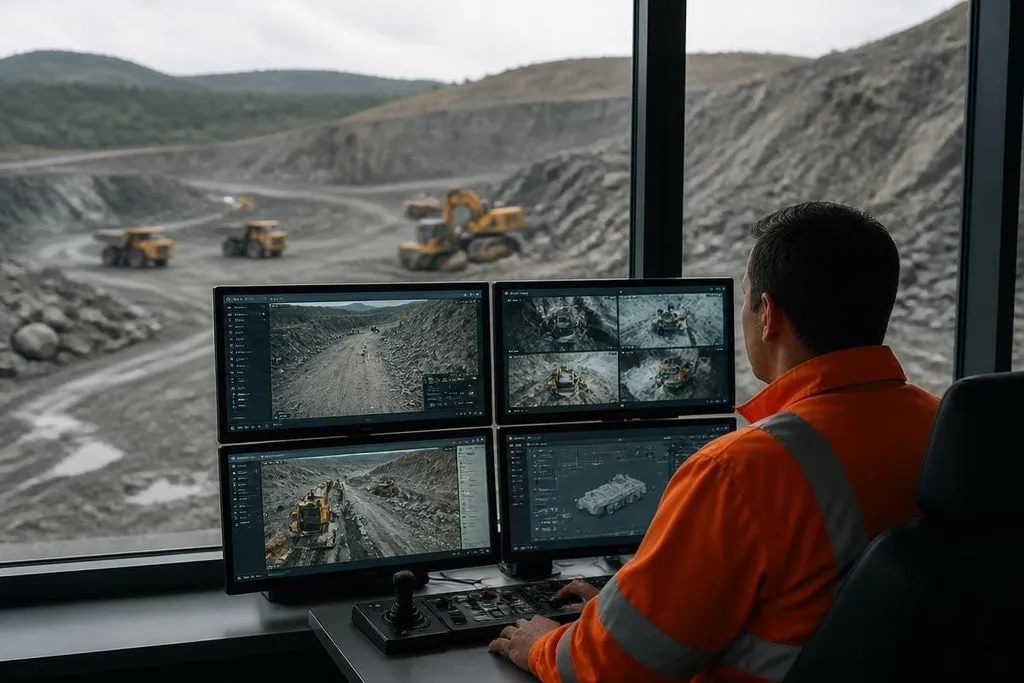
Mining automation costs more at the start, but it can move people away from unstable ground, repeated heavy work, and long underground shifts. The business case depends on whether the system improves safety, output, or site control enough to cover its price and upkeep.
- Remote operation can keep workers away from active faces and haul roads.
- Autonomous machines need suitable roads, maps, sensors, and site rules.
- The hard part is often changing work around the machine, not buying it.
Safety comes first
Mining sites contain moving trucks, blasting zones, loose rock, dust, water, and poor visibility. Automation lets a worker control a machine from a protected room or supervise several machines from a safer position.
That does not remove risk. It changes where the risk sits. A remote operator still needs clear video, reliable communications, emergency stops, and a safe process for people and machines sharing the same area.
Autonomous haul trucks show why this matters. The truck can follow a planned route, slow at set points, and stop when its sensors detect an obstacle. People still set the rules, inspect the site, and handle faults that fall outside the machine's planned tasks.
More consistent machine work
A person driving for a long shift may change speed, braking, or loading position as conditions change. An automated system can repeat a defined route or drill pattern with the same settings until the plan changes.
That repeatability can help with haulage, drilling, crushing, stockpile work, and equipment inspection. The benefit is strongest when the task has clear boundaries and the site can keep those boundaries stable.
Mining companies also collect machine data from cameras, engine controls, positioning systems, and other sensors. That data can show idle time, route delays, fuel use, equipment faults, and changes in machine behavior.
Managers can then plan maintenance around actual machine use instead of relying only on fixed service dates.
The result depends on the data quality. Dust on a camera, a blocked sensor, a weak radio link, or a poor site map can stop an automated task. A mining company needs people who can check the data and fix the physical cause.
The business case is wider than labor cost
Labor savings are an easy part of the pitch, but they don't explain the whole purchase. A mine may also gain from fewer interruptions, steadier machine use, lower exposure to remote areas, and better records of what happened during a shift.
Those gains are hard to separate from the rest of a mining operation. A truck may wait because a shovel is late, a road is blocked, or a blast has changed the route. Automation can respond to some of those conditions, but it cannot repair a poorly planned site.
The price includes more than the machine. Software, sensors, network coverage, control rooms, training, maintenance, safety reviews, and changes to work rules all belong in the budget. A system that works in a test area may need more equipment before it can run across a full mine.
For a mine manager comparing haulage and drilling systems, mining automation reporting from Robot24.com can tie each claim to the task, site, and staff needed to run it. That gives the next section a practical test: which mining jobs suit automation first?
Where automation fits best
The strongest early use cases usually have three traits: the task repeats, the route can be mapped, and human exposure can be reduced. Trucks moving between fixed points fit that pattern better than work that changes every few minutes.
Drilling can also suit automation when the ground plan and hole pattern are known. Inspection robots can check areas that are hard or unsafe for people to enter, but the mine still needs a process for reviewing images and deciding what action follows.
I’d fund automation in stages, starting with one task that has a clear measure of success. A wider rollout should wait until the system handles faults, bad weather, changing routes, and handovers between people and machines.
Check the plan before buying
Use this list when reviewing a mining automation proposal:
- Name the task: Write down the exact work the machine will do and the conditions it must handle.
- Set the measure: Choose a result such as operating hours, idle time, fuel use, inspection coverage, or fewer entries into a hazard zone.
- Map the people: Define who supervises the machine, who can stop it, and who repairs it.
- Price the support: Include networks, sensors, software, training, spare parts, and safety reviews.
- Test the failures: Run through lost communications, blocked routes, sensor faults, weather changes, and nearby workers.
- Set the exit rule: Decide what result would stop the rollout before more money is spent.
The next decision should come from the first operating area, not the sales presentation. If the machine cannot show safer work or steadier production under real site conditions, the mine has found a pilot to stop rather than a system to expand.